Envío GRATIS en pedidos de $75+


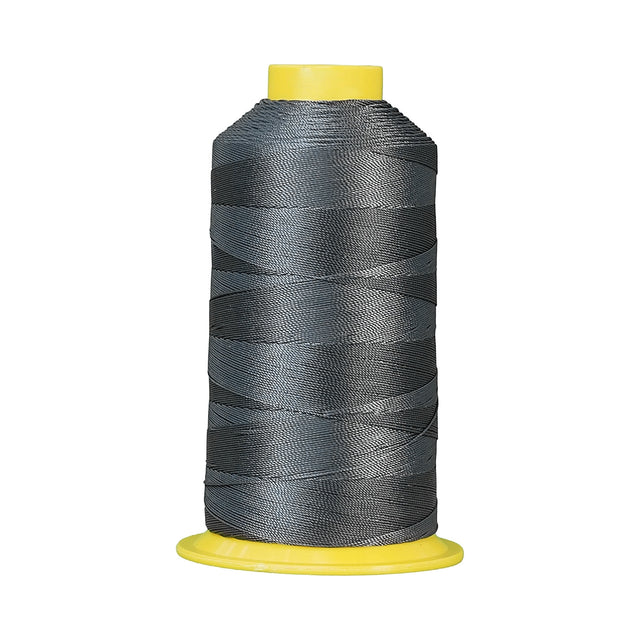
Speedway Tex 135 Bonded Nylon 6 — 1,000 m Cone
En existencia en nuestro almacén de Miami
Se arma, calibra y prueba antes de enviarse.
Free shipping
On orders over $75
Machines, parts & accessories — free in the U.S.


Preguntas frecuentes
¿Cómo se envía?
Envío gratis y rápido desde nuestro almacén en Miami. Es un equipo portátil: llega listo en su caja, sin ensamblaje de mesa.
¿Garantía y soporte?
Garantía con servicio de nuestros propios técnicos en Miami, FL. Soporte en inglés y español: +1 (954) 681-3894 o WhatsApp.

Speedway Tex 135 Bonded Nylon 6 — 1,000 m Cone
Descripción
Descripción
Speedway Tex 135 (size 138) is a bonded nylon 6 (polyamide) sewing thread supplied on a 1,000 m cone (1,094 yds) · 5.3 oz (150 g), available in 8 colors. Bonding fuses the three plies together, so the thread does not fray or break at industrial sewing speeds and the seam keeps the abrasion resistance that upholstery, leather and canvas work demands. Ships from Miami, FL.
Technical Specifications
| Spec | Value |
|---|---|
| Tex | 135 |
| Commercial size | 138 |
| Government size (A-A-59826) | FF |
| Denier | 1215–1260 (420D/3) |
| dTex | 1350 |
| Metric count (Nm) | 7.4 |
| English count (Ne) | 4.4 |
| Material | Bonded nylon 6 (polyamide) |
| Put-up | 1,000 m cone (1,094 yds) · 5.3 oz (150 g) |
| Needle size | Nm 130–150 (Singer 21–23) |
| Colors available | 8 |
What is it used for?
- Leather goods: bags, belts and wallets
- Footwear and saddlery
- Upholstery that flexes, where elastic recovery matters
- Heavy decorative topstitching on leather and vinyl
What needle size should I use?
Use a Nm 130–150 (Singer 21–23) needle with this thread.
That is the size. The system — DBx1, 135x17, 134-35 — depends on your machine, not on the thread. How to identify yours · Industrial machine needles
On leather and coated materials the point matters as much as the size, and the point does depend on the material rather than the machine. Groz-Beckert's leather point guide describes LR (45° cut to the right) as the reference for shoes, leather goods, upholstery, belts and car seats; D/DH (triangular cut) for thick, hard leather; and SD for thin leather, foils and coated materials such as vinyl. We stock these as leather point needles.
Careful with “Nm”: for thread it means 1000/Tex (Tex 135 = Nm 7.4), but for needles it means the blade diameter in hundredths of a millimetre (Nm 110 = 1.10 mm). They are not the same number. Conversion formulas from Coats; government sizes from the A-A-59826 specification published by American & Efird.
Not sure between two sizes?
Tex 135 or Tex 210? Tex 135 handles belts, harness and heavy canvas on any compound-feed machine. Only go to 210 if your machine is built for it — many will not pass that diameter cleanly.
Nylon 6 vs. Nylon 66 — what changes
Both are bonded nylons and both are strong. Nylon 66 is stiffer, more abrasion resistant and melts at a higher temperature, which is why it is the default for hard industrial use. Nylon 6 recovers better from stretching and repeated flexing, which suits leather goods and upholstery that moves — a bag handle, a seat that gets sat on every day.
Neither is simply better. Pick nylon 66 for abrasion and heat, nylon 6 for flex and recovery.
Frequently Asked Questions
What needle size should I use with Tex 135?
Nm 130–150 (Singer 21–23). If the stitch looks starved or the thread frays, go one size up before changing anything else.
What is the difference between Tex 135 and size 138?
None — they are the same thread described in two numbering systems. Tex is the weight in grams of 1,000 metres; the commercial size comes from the older US system.
Should I use Tex 135 or the next size?
Tex 135 or Tex 210? Tex 135 handles belts, harness and heavy canvas on any compound-feed machine. Only go to 210 if your machine is built for it — many will not pass that diameter cleanly.
How many yards are on the cone?
This is a 1,000 m cone (1,094 yds) · 5.3 oz (150 g). Metres and yards are an exact conversion, so that figure is not an estimate.
Nylon 6 or nylon 66 — which should I buy?
Nylon 66 is stiffer, more abrasion resistant and takes more heat, so it is the default for hard industrial work. Nylon 6 recovers better from stretching and repeated flexing, which suits leather goods and upholstery that moves — a bag handle, a seat used every day. Neither is simply better.
Will this work on a domestic machine?
No. Tex 135 needs an industrial machine — walking foot or compound feed. A domestic will not pull this diameter through reliably, and forcing it usually means skipped stitches and a bent needle.