FREE Shipping on Orders $75+


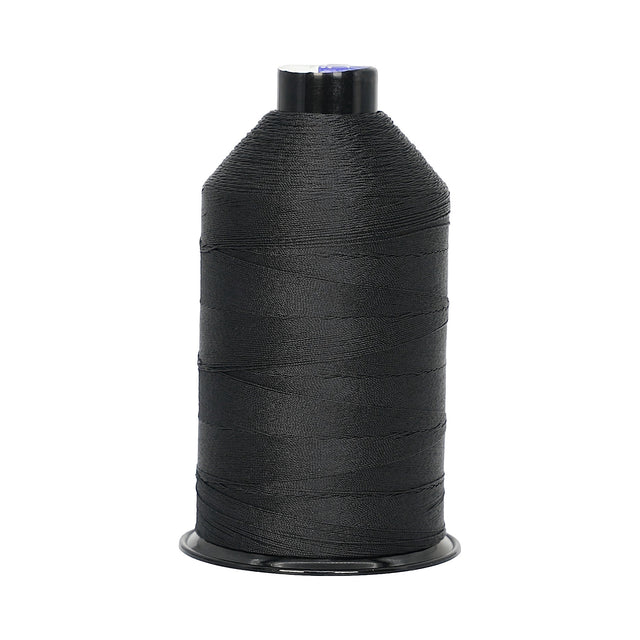
Speedway UV Bonded Nylon — 8.8 oz Spool
In stock at our Miami warehouse
Assembled, calibrated and test-stitched before it ships.
Free shipping
On orders over $75
Machines, parts & accessories — free in the U.S.


Frequently asked
How does it ship?
Fast free shipping from our Miami warehouse. It's a portable unit — arrives boxed and ready, no table assembly involved.
Warranty & support?
Warranty backed by our own techs in Miami, FL. Support in English & Spanish: +1 (954) 681-3894 or WhatsApp.

Speedway UV Bonded Nylon — 8.8 oz Spool
Description
Description
Speedway UV Resistant Bonded Nylon 66 thread is a UV-treated bonded nylon 66 sewing thread supplied on an 8.8 oz (250 g) spool, available in 6 colors. Bonding fuses the three plies together, so the thread does not fray or break at industrial sewing speeds and the seam keeps the abrasion resistance that upholstery, leather and canvas work demands. Ships from Miami, FL.
Technical Specifications
| Spec | Value |
|---|---|
| Sizes available | Tex 45 (Size 46) · Tex 70 (Size 69) · Tex 92 (Size 92) |
| Construction | 150D/3 · 210D/3 · 280D/3 |
| Material | UV-treated bonded nylon 66 |
| Put-up | 8.8 oz (250 g) spool |
| Colors available | 2 |
8.8 oz, not 8
Bonded nylon in this class is normally sold on 4 oz or 8 oz spools. This one holds 8.8 oz (250 g) — roughly 10% more thread than the common 8 oz spool, on the same footprint and the same spool change. Worth checking when you compare prices: the cheaper spool is often the smaller one.
What “UV resistant” means on this thread
This is bonded nylon 66 with a UV-resistant treatment. Untreated nylon loses strength when it is left in direct sunlight, and on outdoor work the thread almost always fails before the fabric does — which means restitching a cover or an awning that is otherwise perfectly good. The treatment is there to push that failure point back.
It keeps everything that makes bonded nylon 66 worth using: high tenacity for its diameter, abrasion resistance, and a bonding agent that stops the plies fraying at industrial speeds. It adds resistance to prolonged sun exposure, moisture and mildew.
Being straight about the limits
We are not going to quote you a number of years in the sun, because we have no laboratory certificate for this thread and everyone who does quote one either has that certificate or is guessing. When ours arrives, it goes on this page.
And one honest comparison: for permanently unshaded, year-round marine exposure, the industry standard is a polyester or PTFE thread — a different material class with a price to match. This UV-treated nylon is the right choice when you want nylon's strength and abrasion resistance on work that lives outdoors, at a fraction of that cost. If you are stitching a sail that never comes down, buy the PTFE.
What is it used for?
- Outdoor furniture and patio upholstery
- Awnings, umbrellas and covers left in the sun
- Boat covers and marine upholstery
- Any outdoor seam where standard nylon gives out first
What needle size should I use?
| Thread size | Needle Nm (metric) | Needle size (Singer/US) |
|---|---|---|
| Tex 45 | 90–100 | 14–16 |
| Tex 70 | 100–130 | 16–21 |
| Tex 92 | 110–130 | 18–21 |
That is the size. The system — DBx1, 135x17, 134-35 — depends on your machine, not on the thread. How to identify yours · Industrial machine needles
On leather and coated materials the point matters as much as the size, and the point does depend on the material rather than the machine. Groz-Beckert's leather point guide describes LR (45° cut to the right) as the reference for shoes, leather goods, upholstery, belts and car seats; D/DH (triangular cut) for thick, hard leather; and SD for thin leather, foils and coated materials such as vinyl. We stock these as leather point needles.
What is this thread in denier, ticket and government size?
Each size below is the same thread described in every numbering system in use, so you can match it against whatever your spec sheet calls it.
| Tex | Denier | dTex | Nm (thread) | Ne | Construction | US size | Govt. |
|---|---|---|---|---|---|---|---|
| 45 | 405 | 450 | 22.2 | 13.1 | 150D/3 | 46 | B |
| 70 | 630 | 700 | 14.3 | 8.4 | 210D/3 | 69 | E |
| 92 | 810–840 | 900 | 11.1 | 6.6 | 280D/3 | 92 | F |
Careful with “Nm”: for thread it means 1000/Tex (Tex 45 = Nm 22.2), but for needles it means the blade diameter in hundredths of a millimetre (Nm 110 = 1.10 mm). They are not the same number. Conversion formulas from Coats; government sizes from the A-A-59826 specification published by American & Efird.
Bonded Nylon vs. Spun Polyester — which one?
Bonded nylon is stronger for its diameter and more abrasion resistant, and the bonding agent keeps the plies from fraying at high sewing speeds. It is the standard for upholstery, leather and canvas worked indoors or under cover.
Spun polyester holds up better to prolonged sunlight and moisture. For anything that lives outdoors year-round, polyester — or our UV-treated nylon — is the safer choice.
Frequently Asked Questions
Is this the same thing as Sunguard or Tenara?
No, and the difference matters. Those are polyester and PTFE threads — different material classes, priced accordingly. This is bonded nylon 66 with a UV-resistant treatment: nylon strength and abrasion resistance, with protection added for outdoor exposure.
How many years will it last in the sun?
We do not publish a figure. We have no laboratory certificate for this thread, and a number without one is a guess. When the certificate arrives it goes on this page.
Can I use it indoors as well?
Yes. It is bonded nylon 66 first and UV-treated second, so it behaves like standard bonded nylon on upholstery, leather and canvas. The treatment only adds protection you will not need indoors.
Which size should I pick?
Tex 45 for light upholstery and fine leather, Tex 70 for general outdoor upholstery and covers — the most popular size — and Tex 92 for heavy covers, boat work and anything under real tension.
What needle do I need?
Nm 90-100 (Singer 14-16) for Tex 45, Nm 100-130 (16-21) for Tex 70 and Nm 110-130 (18-21) for Tex 92. On leather or vinyl use an LR point.
How much thread is on the spool?
Each spool holds 250 g (8.8 oz). We do not publish a yardage figure because the bonding resin adds weight that the nominal Tex does not account for — converting it would be a guess.